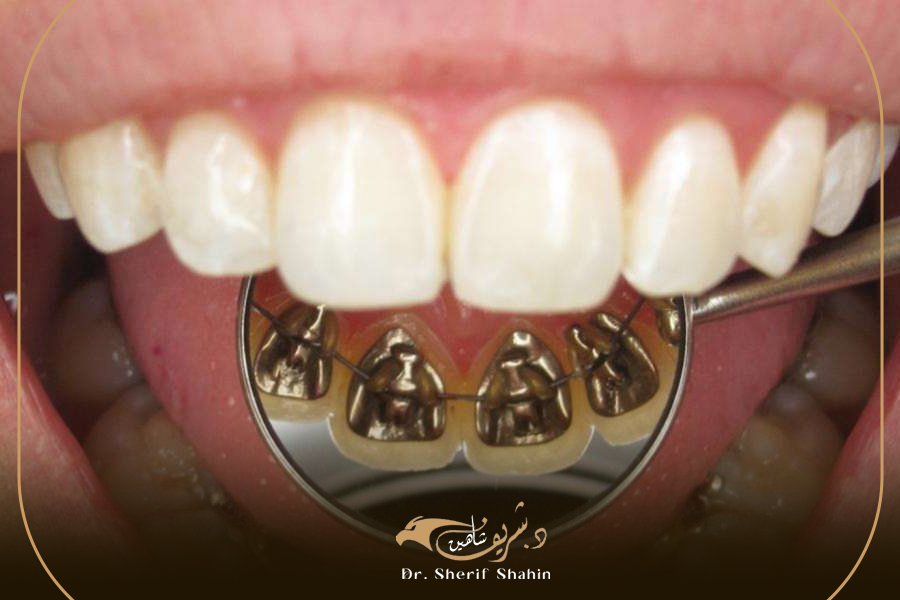
Lingual braces, or hidden braces, are a type of orthodontics characterized by placing brackets and brackets on the inner surface of the teeth, that is, the side facing the tongue, rather than on the visible outer side. This feature makes it an ideal choice for people who want to straighten their teeth without others noticing.
Advantages of lingual braces:
Invisible appearance: This is the main advantage of lingual braces, as they cannot be seen from the outside, making them an attractive option for adults who are embarrassed to wear traditional braces.
High effectiveness: Lingual braces are effective in treating most dental problems, including tooth crowding, spacing, and bite problems.
Precision in treatment: Because lingual braces are designed specifically for each patient, they provide high precision in tooth movement and guidance.
Disadvantages of lingual braces:
Difficulty in cleaning: Teeth and lingual braces may be more difficult to clean than traditional braces, requiring special attention to oral hygiene.
Difficulty speaking: Some patients may have difficulty speaking in the first days after lingual braces are installed, but this problem usually disappears with time.
Higher cost: Lingual braces are usually more expensive than traditional braces.
Longer treatment period: In some cases, the treatment period with lingual braces may be longer than traditional braces.
Who is a suitable candidate for lingual orthodontics?
Lingual braces are a suitable option for adults and teens who want to straighten their teeth invisibly. However, it may not be suitable for all cases, so you should consult a dentist to evaluate the condition and determine whether lingual braces are the best option.
Duration of treatment:
The duration of lingual orthodontic treatment varies depending on the patient's condition and the complexity of the problem but usually ranges between 18 months and 3 years.
Conclusion:
Lingual braces are an excellent option for people looking for an invisible and effective way to straighten their teeth. However, the patient should be aware of potential challenges, such as difficulty cleaning and speaking and high cost.